
Co-Author: VADM Joseph M Coyme PCG (Ret), Ph.D.
Anyone can advance imaginative theories that a distant island is merely the “natural geographic extension” of another territory. Yet such arguments collapse under both logic and international law.
The flaw lies in confusing physical geography with sovereignty—two entirely different concepts that must never be conflated. China, or any other state, cannot derive sovereignty merely because an island lies on the same geological shelf, shares tectonic features, or appears to be a natural extension of another landmass. International law has consistently rejected such reasoning.
If geographical continuity alone determined sovereignty, the consequences would be both illogical and destabilizing.
Consider Hainan Island. It was once physically connected to continental Asia through prehistoric land bridges during periods of lower sea levels. Given its proximity to both China and Vietnam across the Gulf of Tonkin, one could just as easily argue that Hainan forms part of Vietnam’s natural geographic extension. Yet no serious geographer, historian, or international lawyer would contend that geological continuity determines sovereignty over Hainan.
The same flawed reasoning can be turned in the opposite direction. If “natural geographic extension” were accepted as a legal basis for territorial acquisition, one could just as readily argue that Taiwan itself forms part of the Philippine archipelagic system. Taiwan lies immediately north of the Batanes-Babuyan island chain and shares geological and tectonic continuity along the Luzon Volcanic Arc. By that reasoning, Taiwan could be portrayed as merely the northern extension of the Philippine archipelago and therefore part of the Philippines.
Such a conclusion is obviously untenable. The Philippines has never claimed Taiwan on geological grounds, nor would any responsible State advance territorial claims based solely on tectonic continuity. This illustrates precisely why international law rejects the doctrine of “natural geographic extension” as a mode of acquiring sovereignty.
The same reasoning applies with equal force to Batanes.
That Batanes may share geological characteristics with Taiwan or belong to the same island arc does not confer political ownership. Geological formations are the product of tectonic processes operating over millions of years, whereas sovereign boundaries arise from history, treaties, effective administration, constitutional governance, international recognition, and the freely expressed allegiance of peoples. The former belongs to the realm of earth science; the latter belongs to the realm of international law.
If “natural geographic extension” were accepted as a legal basis for territorial acquisition, the world’s political map would descend into chaos. Numerous islands across the globe are geologically linked to neighboring landmasses while remaining sovereign territories of entirely different States.
Examples abound:
- The British Isles rest upon the European continental shelf, yet they are not politically part of continental Europe.
- Madagascar shares geological origins with Africa, yet it exists as an independent sovereign State.
- Tasmania lies on the same continental shelf as mainland Australia, but its constitutional status derives from legal and political history rather than geology.
- Throughout Southeast Asia, many islands share common geological origins while belonging to different sovereign States.
International law has never recognized geological affinity as evidence of sovereignty.
The United Nations Convention on the Law of the Sea (UNCLOS) derives maritime entitlements from sovereignty over land territory—not from geological theories or tectonic formations. Likewise, the 2016 South China Sea Award of the Permanent Court of Arbitration reaffirmed that maritime rights must rest upon lawful title under international law rather than historical narratives or geographical imagination.
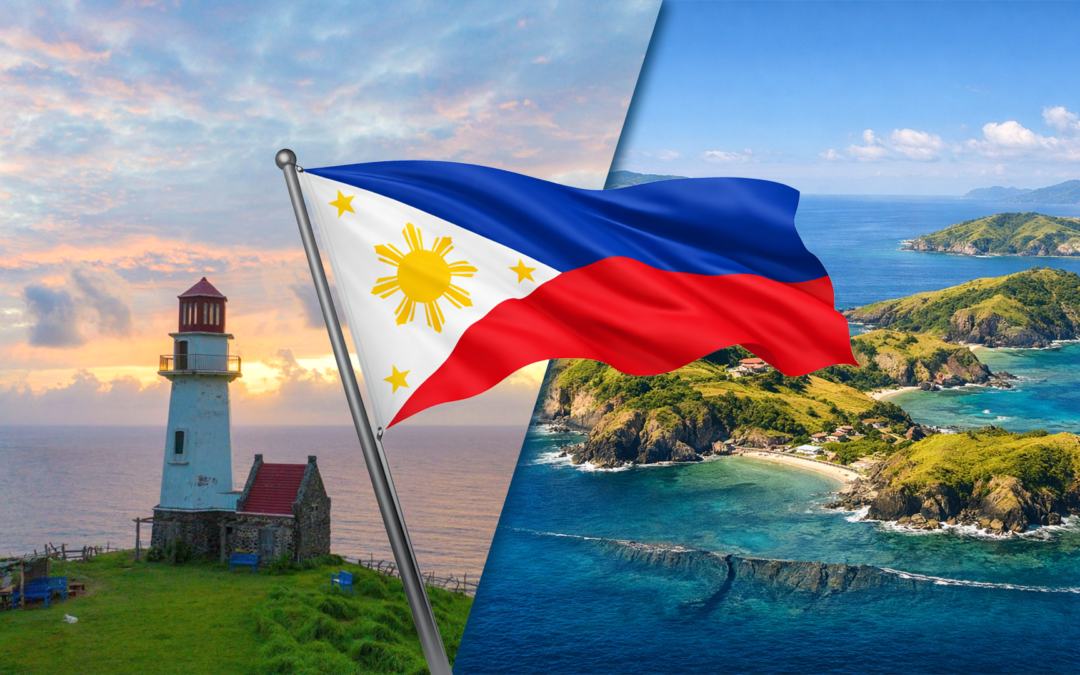
More importantly, Batanes has remained under continuous Philippine administration since the Spanish colonial period and, following Philippine independence, has continued as an integral province of the Republic of the Philippines. Philippine sovereignty over Batanes rests upon continuous and effective administration, recognized international boundaries, constitutional governance, the peaceful exercise of state authority, and the allegiance of its inhabitants—not upon tectonic plates, volcanic arcs, or prehistoric land bridges.
Geography may explain how islands came into existence; it does not determine who owns them.
To argue that Batanes belongs to Taiwan because it constitutes a “natural geographic extension” is no more persuasive than arguing that Hainan belongs to Vietnam because it shares the Asian continental landmass, or that Taiwan belongs to the Philippines because it forms the northern continuation of the Luzon Volcanic Arc, or that Britain should belong to continental Europe because both rest upon the same continental shelf.
Such arguments belong to the realm of geology—not international law.
Ultimately, sovereignty is determined not by prehistoric geography but by effective occupation, continuous administration, treaties, international recognition, and the settled principles of international law. To accept geological extension as a basis for territorial acquisition would undermine the stability of the international legal order and invite limitless revisionist claims across the globe. It would replace established legal principles with speculative geological theories, eroding the certainty upon which peaceful relations among States depend.