
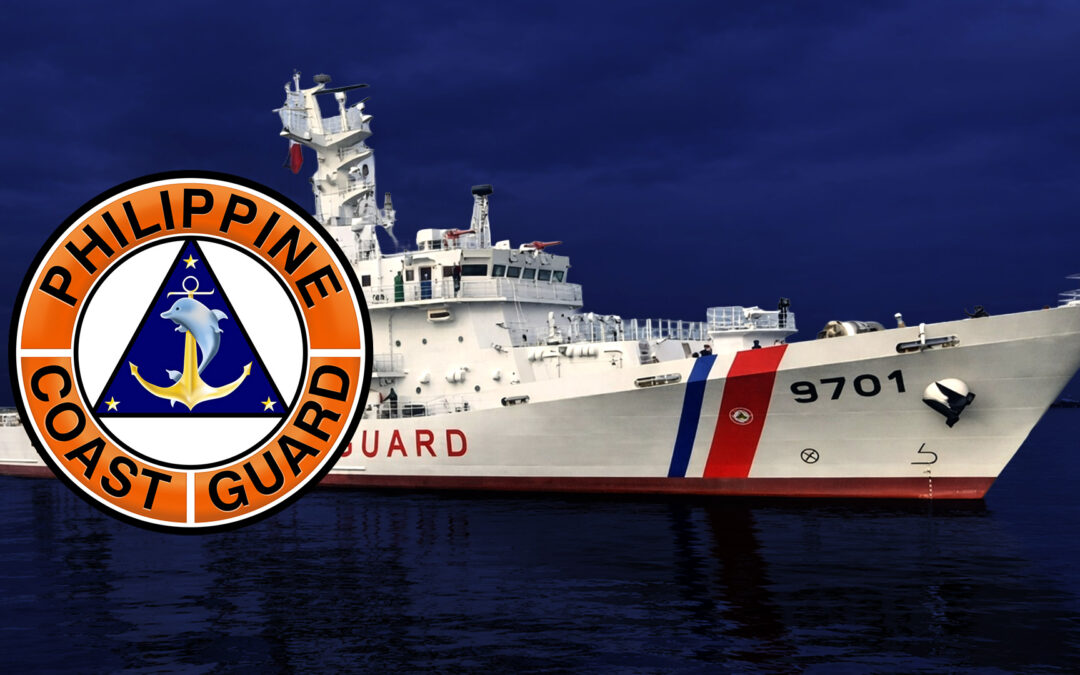
Strengthening Governance, Professionalization, and Administrative Oversight in the Era of Maritime Security Tensions
By VADM Joseph M. Coyme, PCG (Ret.)
Disclaimer: The views and opinions expressed in this article are solely those of the author and do not necessarily reflect the official position of the Philippine Coast Guard, the Department of Transportation, or any other government agency.
The Philippine Coast Guard (PCG) has undergone one of the most remarkable institutional transformations in the Philippine government.
From approximately 3,000 personnel when it was transferred from the Department of National Defense (DND) to the Department of Transportation and Communications (DOTC), now the Department of Transportation (DOTr), in 1998 through Executive Orders No. 475 and No. 477, the organization has grown to nearly 36,000 personnel today, with an authorized strength of 37,689 under its approved Table of Organization and Equipment (TOE).
Its fleet has expanded significantly. Its operational footprint now covers the entire Philippine archipelago. Its mission set has broadened from traditional maritime safety functions to include maritime security, maritime law enforcement, marine environmental protection, maritime domain awareness, humanitarian assistance and disaster response, and the protection of Philippine sovereign rights and jurisdiction in the West Philippine Sea as mandated under Republic Act No. 9993, otherwise known as the Philippine Coast Guard Law of 2009.
This extraordinary growth raises an important question:
Has the governance structure of the Philippine Coast Guard evolved at the same pace as its operational expansion?
The answer, arguably, is no.
The next stage of Coast Guard modernization should not be measured solely by the number of ships acquired, aircraft commissioned, or stations constructed. Equally important is the strengthening of governance, professionalization, personnel management, and administrative accountability systems capable of sustaining a modern maritime service in an increasingly complex security environment.
Growth Versus Institutional Maturity
Growth and maturity are not synonymous.
Growth is reflected in increased manpower, assets, budget, and operational responsibilities. Institutional maturity is reflected in the strength of governance systems, accountability mechanisms, leadership development frameworks, professional standards, and personnel management structures.
The PCG has clearly achieved growth.
What is now required is institutional maturity.
Managing an organization of nearly 40,000 personnel presents governance challenges that differ substantially from those of a 3,000-person organization. As personnel strength increases, organizations inevitably encounter challenges involving promotion management, career progression, professional standards, training quality assurance, disciplinary systems, leadership succession, workforce planning, and organizational accountability.
International governance studies have consistently shown that rapidly expanding security-sector organizations require corresponding investments in institutional capacity, human resource systems, and accountability mechanisms to sustain long-term effectiveness (OECD, 2021; World Bank, 2020).
The challenge is therefore not unique to the Philippine Coast Guard. It is a natural consequence of rapid institutional expansion.
Defining the Governance Gap
The governance gap confronting the PCG is not a complete absence of oversight.
The Department of Transportation provides policy direction and administrative supervision. The Civil Service Commission oversees applicable civil service matters. The Commission on Audit ensures fiscal accountability. The Office of the Ombudsman investigates misconduct and corruption.
However, no institution is dedicated exclusively to the governance, professionalization, and long-term personnel development of the Philippine Coast Guard.
Several critical functions remain fragmented or underserved:
- Long-term workforce planning;
- Career path development;
- Promotion system evaluation;
- Leadership succession management;
- Organizational Structure Analysis;
- Professional standards monitoring;
- Competency certification;
- Administrative policy review; and
- Institutional performance assessment.
As the organization continues to expand, governance vulnerabilities may emerge, including promotion bottlenecks, uneven professional development opportunities, inconsistent personnel management practices, leadership succession gaps, and increasing administrative workloads.
Delaying reforms may increase these risks and ultimately affect operational readiness, morale, and institutional effectiveness.
The Professionalization Imperative
Modern coast guards are no longer merely operational organizations; they are professional institutions that depend on systematic human capital development to fulfill increasingly complex maritime responsibilities. As maritime challenges evolve, professionalization must extend beyond recruitment and basic training to encompass a comprehensive career management and personnel development framework.
Future reforms should therefore include:
- Competency-based promotion systems;
- Structured career path development;
- Continuing professional education and certification programs;
- Leadership development and certification requirements;
- Specialized career tracks aligned with the Philippine Coast Guard’s core functions—Maritime Safety, Maritime Security, and Marine Environmental Protection;
- Executive development programs for senior officers; and
- Technical specialization pathways for enlisted personnel.
Professionalization ensures that career advancement is based not only on seniority but also on demonstrated competence, leadership capability, professional achievement, and mission performance. Such a system moves the organization away from a predominantly generalist model and toward one that values functional specialization, technical expertise, and operational excellence. By cultivating specialists in critical maritime disciplines, the Philippine Coast Guard can strengthen institutional capacity, improve operational effectiveness, and develop future leaders equipped to address the increasingly sophisticated demands of maritime governance and security.
These approaches are consistent with the personnel management practices adopted by leading coast guards and maritime services worldwide, where professional development, specialization, and merit-based advancement are recognized as essential foundations of organizational effectiveness and long-term institutional maturity.”
Lessons from International Coast Guards
The professionalization of maritime services is not a uniquely Philippine challenge.
The United States Coast Guard maintains comprehensive career management systems supported by structured education, leadership development, and professional certification programs.
The Japan Coast Guard emphasizes technical expertise, continuous training, and specialized operational career tracks.
The Korea Coast Guard integrates personnel development, competency assessment, and institutional oversight into its organizational management framework.
While each service operates under a different legal and political environment, a common principle emerges:
Operational excellence is sustained by strong governance and professional personnel systems.
The Philippine Coast Guard may benefit from adopting selected best practices while preserving its unique legal and institutional character.
Preserving the Coast Guard’s Sui Generis Character
Any governance reform must recognize that the PCG is not an ordinary government agency.
The Philippine Coast Guard occupies a unique position within government. It performs maritime governance functions while simultaneously operating as a uniformed service with national security responsibilities.
Its command structure, disciplinary system, operational readiness requirements, deployment policies, and personnel management practices distinguish it from conventional civilian agencies.
Historically, the PCG traces its institutional roots to the Armed Forces of the Philippines. Although transferred to civilian oversight under the DOTr, it retained many characteristics necessary for effective maritime operations.
For this reason, governance reforms should strengthen—not diminish—the PCG’s status as a sui generis uniformed service.
The objective is not civilianization.
The objective is institutional strengthening.
Evaluating Policy Options
Several policy approaches are available.
Option 1: Strengthen Governance and Professionalization Through the Department of Transportation
As the parent department of the Philippine Coast Guard, the Department of Transportation is in the best position to immediately strengthen governance, professionalization, and administrative oversight within the organization.
Rather than creating a new institution at the outset, the DOTr could establish a dedicated Coast Guard Governance and Professionalization Office or a similar mechanism responsible for:
- Long-term workforce planning;
- Career path development and succession management;
- Promotion system review and evaluation;
- Leadership development programs;
- Professional standards monitoring;
- Organizational structure analysis and assessments;
- Human resource modernization initiatives;
- Competency certification frameworks; and
- Strategic personnel policy development.
The Department could also institutionalize periodic governance reviews to ensure that personnel policies, leadership development systems, and professional standards evolve alongside the Coast Guard’s expanding operational responsibilities.
This option offers several advantages.
First, it can be implemented immediately within the existing legal and administrative framework. Second, it minimizes additional bureaucratic costs. Third, it reinforces the Department’s oversight responsibilities while preserving the operational autonomy of the Coast Guard. Finally, it allows governance reforms to be tested and refined before considering more comprehensive legislative measures.
Most importantly, this approach recognizes that governance and professionalization are matters of national maritime governance and public accountability.
However, while strengthened DOTr oversight may significantly improve governance and professionalization, it may not fully address the long-term need for institutional continuity and independent oversight beyond changes in administration.
Option 2: Establish an Interim Administrative Oversight Board
An Interim Coast Guard Administrative Oversight Board could be created through Executive Order.
This option would provide immediate oversight capabilities and allow the government to evaluate governance reforms before pursuing legislation.
The Board may include representatives from the DOTr, PCG, Civil Service Commission, Department of Budget and Management, Maritime Industry Authority, and other relevant agencies.
However, its authority could be limited by changes in administration and executive priorities.
Option 3: Establish a Philippine Coast Guard Commission
The most comprehensive option would be the creation of a Philippine Coast Guard Commission through legislation.
Such a body could provide permanent institutional oversight, professional standards management, organizational assessments, personnel governance, and long-term policy continuity.
Potential functions may include:
- Personnel governance and workforce planning;
- Promotion and career management oversight;
- Leadership development and professional standards programs;
- Organizational structure analysis and performance assessments;
- Administrative investigations and disciplinary review; and
- Strategic modernization and institutional development planning.
Operational command and control would remain with the Commandant and the Coast Guard chain of command, ensuring that governance oversight does not interfere with operational effectiveness.
Among the available options, this appears to offer the most sustainable long-term solution.
Governance Reform and Operational Effectiveness
The strongest argument for governance reform is not administrative efficiency alone.
It is operational effectiveness.
Strong governance contributes directly to:
- Faster and more transparent personnel decisions;
- Improved organizational readiness;
- Better leadership development;
- Higher morale and retention;
- Reduced misconduct and disciplinary issues;
- More efficient use of resources; and
- Greater public trust and credibility.
In the increasingly contested maritime environment of the West Philippine Sea, organizational effectiveness depends as much on institutional strength as it does on operational capability.
Better governance ultimately produces better maritime outcomes.
Why This Matters Now
The Philippines faces unprecedented maritime challenges.
The West Philippine Sea remains an area of strategic competition. Maritime crimes continue to evolve. Climate-related disasters increasingly affect coastal communities. Maritime commerce continues to expand.
As these challenges grow, the Coast Guard’s role will become even more important.
Citizens expect professionalism.
Government expects accountability.
International partners expect reliability.
The maritime industry expects competence.
Meeting these expectations requires not only modern assets but also mature institutions.
The Next Stage of Evolution
The Philippine Coast Guard has already proven that it can grow.
The challenge now is to ensure that governance systems mature at the same pace.
Institutional maturity requires professionalization, accountability, transparency, meritocracy, and effective oversight.
Whether through strengthened governance within the Department of Transportation, an interim oversight board, or ultimately a Philippine Coast Guard Commission, governance reform should be viewed as a natural and necessary progression in the evolution of the organization.
The strongest institutions are those that continuously improve their governance while preserving their operational effectiveness and institutional identity.
For the Philippine Coast Guard, the journey from growth to maturity is more than an administrative undertaking.
It is a strategic imperative for the future of Philippine maritime governance, national security, and public service.
References
1987 Constitution of the Republic of the Philippines.
Executive Order No. 475 (1998), Transferring the Philippine Coast Guard from the Department of National Defense to the Department of Transportation and Communications.
Executive Order No. 477 (1998), Prescribing the Implementing Mechanisms for the Transfer of the Philippine Coast Guard to the Department of Transportation and Communications.
Human Resource Development and Training Program publications of the KCG
Japan Coast Guard, Japan Coast Guard Annual Report
Republic Act No. 9993 (2009), Philippine Coast Guard Law of 2009.
Republic Act No. 6975 (1990), Department of the Interior and Local Government Act of 1990.
Republic Act No. 8551 (1998), Philippine National Police Reform and Reorganization Act of 1998.
Organization for Economic Co-operation and Development (OECD). (2021). Public Governance and Institutional Capacity in Security Sector Organizations.
United Nations Office on Drugs and Crime (UNODC). (2022). Maritime Security Threats and Governance Challenges in Southeast Asia.
United States Coast Guard, Leadership Development Framework (latest editions)
World Bank. (2020). Governance and Institutional Strengthening in Public Sector Organizations.
Philippine Coast Guard. (2023). Annual Report and Organizational Profile.
Department of Transportation. (2023). Philippine Coast Guard Organizational Updates and Modernization Initiatives.