
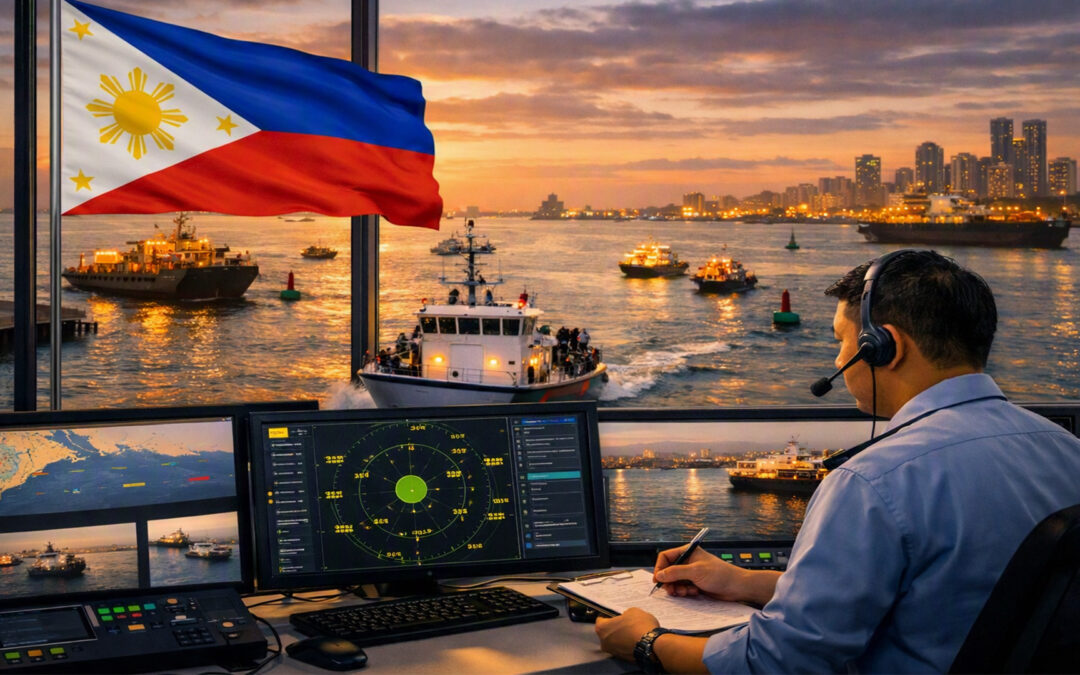
Manila Bay Must Remain Safe: Why Stopping Sea Robbery is a National Imperative
Protecting International Shipping, Strengthening Maritime Security, and Safeguarding the Philippines’ Global Reputation
By: VADM Joseph M. Coyme, PCG (Ret.), Ph.D.
Co-Author: Vadm Robert N Patrimonio PCG (Ret.), Ph.D.
For centuries, Manila Bay has been the Philippines’ principal maritime gateway to the world. Every day, hundreds of international merchant vessels carrying fuel, food, raw materials, manufactured goods, and other essential commodities transit or anchor within its waters. The uninterrupted movement of these ships is not merely a matter of commerce—it is vital to national economic security, regional supply chains, and international trade.
Recent reports, however, have raised serious concerns within the global maritime community. Between 1 January and 30 July 2026, the Vessel Traffic Management System (VTMS)-Manila and the Regional Cooperation Agreement on Combating Piracy and Armed Robbery against Ships in Asia (ReCAAP) Information Sharing Centre documented 43 reported robbery and attempted robbery incidents involving vessels anchored in Manila Bay. While most incidents involved theft of ship’s stores and equipment rather than violence against crews, the frequency and recurring nature of these crimes should concern every Filipino.
These are not isolated acts of petty theft. They reveal vulnerabilities in maritime security that, if left unaddressed, could undermine confidence in the Philippines as a safe and reliable maritime nation.
Why the International Shipping Industry Should Be Concerned
Shipping companies invest billions of dollars in ships, cargoes, and logistics networks. Before deciding where to call, operators carefully assess the security environment of every port.
Repeated robberies at the same anchorage areas inevitably raise questions about the effectiveness of local security measures. Even when losses are relatively minor, every incident results in delays, operational disruptions, insurance implications, additional security costs, and increased administrative reporting.
For international shipowners, predictability and security are as important as port efficiency.
A reputation for unsafe anchorages may eventually lead to:
- Higher marine insurance premiums.
- Additional security requirements imposed by shipowners.
- More restrictive security advisories.
- Increased operating costs.
- Reduced attractiveness of Philippine ports for regional trade.
Such consequences extend far beyond the shipping industry. They affect exporters, importers, investors, and ultimately the Philippine economy.
A Shared Responsibility
The Philippines has one of the most comprehensive legal frameworks governing maritime security.
The International Ship and Port Facility Security (ISPS) Code, SOLAS Chapter XI-2, Republic Act No. 9993 (Philippine Coast Guard Law), Executive Order No. 311, and the National Security Program for Sea Transport and Maritime Infrastructure collectively provide a strong foundation for protecting ships and ports.
The challenge lies not in the absence of laws, but in ensuring that these policies translate into effective operational action.
Maritime security is a shared responsibility.
The Office for Transportation Security establishes standards and regulatory oversight.
The Philippine Ports Authority administers port facilities.
Port operators implement security plans.
Shipping companies strengthen shipboard security.
Masters and Ship Security Officers maintain vigilant watchkeeping.
Above all, the Philippine Coast Guard, by virtue of its mandate under Republic Act No. 9993, serves as the country’s principal operational maritime law enforcement and maritime security agency.
Success depends on all stakeholders working together through intelligence sharing, coordinated patrols, and unified command and control.
Patterns That Demand Action
Analysis of reported incidents reveals clear operational patterns.
Most robberies occur between 2200H and 0500H, while vessels remain anchored awaiting berth assignment. Perpetrators typically approach in small, unlit boats, quietly board ships using anchor chains or pilot ladders, steal portable equipment, and escape within minutes.
These recurring methods suggest planning, reconnaissance, and familiarity with vessel movements rather than opportunistic crime.
Such predictable patterns provide authorities with an opportunity to shift from reactive responses to preventive, intelligence-led operations.
The Importance of Maritime Domain Awareness
Modern maritime security is no longer dependent solely on patrol boats.
Today’s security environment requires the integration of:
- Vessel Traffic Management Systems (VTMS)
- Automatic Identification System (AIS)
- Coastal radar
- CCTV
- Thermal imaging
- Drones
- Intelligence databases
- Real-time communications
When combined into a unified Maritime Domain Awareness (MDA) network, these technologies allow authorities to detect suspicious activities before crimes occur, enabling rapid response and more efficient deployment of maritime law enforcement assets.
This approach should become the operational standard for Manila Bay and eventually for all major Philippine ports and strategic sea lanes.
Immediate Reporting Saves Time—and Ships
Another important lesson emerging from recent incidents is the need for real-time reporting.
Every Master whose vessel experiences robbery or attempted robbery should immediately notify:
- The Philippine Coast Guard;
- The nearest Coast Guard Station;
- The Port Facility Security Officer;
- The Company’s Security Officer; and
- The ReCAAP Information Sharing Centre.
Prompt reporting allows authorities to initiate immediate pursuit operations, warn nearby vessels, identify crime patterns, and strengthen regional maritime security cooperation.
Timely information is often the difference between apprehending perpetrators and allowing them to disappear.
Protecting the Philippines’ Maritime Reputation
The Philippines is pursuing ambitious initiatives to modernize its maritime sector, including the development of a National Vessel Traffic Management System, enhancement of Maritime Domain Awareness, expansion of port infrastructure, and eventual international recognition of Philippine Archipelagic Sea Lanes.
These initiatives seek to position the country as a secure, efficient, and globally competitive maritime gateway in the Indo-Pacific.
Persistent robbery incidents threaten these national objectives.
A country seeking to become a premier maritime logistics hub must demonstrate that ships calling at its ports can expect safety, security, and professional maritime governance.
A Call for Unified Action
The reported incidents in Manila Bay should not be viewed merely as criminal cases. They represent an opportunity to strengthen maritime governance, improve inter-agency coordination, and modernize operational security.
PASLCI respectfully recommends the establishment of a Joint Manila Bay Maritime Security Task Group composed of the Philippine Coast Guard, Philippine Ports Authority, Office for Transportation Security, MARINA, Philippine Navy, PNP Maritime Group, Bureau of Customs, port operators, shipping companies, and other maritime stakeholders. Such a mechanism would promote unified planning, intelligence sharing, coordinated patrols, and rapid response to emerging threats.
Equally important is a clear delineation of institutional responsibilities. The Office for Transportation Security should continue to provide policy direction, regulatory oversight, compliance monitoring, and ISPS audits, while the Philippine Coast Guard should serve as the government’s lead operational maritime security agency, fully utilizing its statutory authority, operational assets, and nationwide command-and-control capabilities.
Looking Ahead
The maritime industry thrives on trust.
Every ship that enters Manila Bay should have confidence that Philippine authorities possess the capability, commitment, and coordination necessary to ensure its safety while in our waters.
Protecting international shipping is not simply about preventing theft. It is about safeguarding the nation’s economic lifelines, preserving the confidence of the international maritime community, and demonstrating that the Philippines remains a responsible maritime nation committed to the highest standards of safety and security.
Addressing sea robbery decisively today will strengthen not only Manila Bay, but also the Philippines’ standing as a trusted maritime partner in the Indo-Pacific and a nation worthy of the confidence of the global shipping community.
Key References
- International Maritime Organization (IMO), International Convention for the Safety of Life at Sea (SOLAS), 1974, Chapter XI-2 (as amended).
- International Maritime Organization (IMO), International Ship and Port Facility Security (ISPS) Code, Parts A and B.
- International Maritime Organization (IMO), International Convention for the Safety of Life at Sea (SOLAS), 1974, Chapter XI-2 (as amended).
- IMO Maritime Safety Committee (MSC) Circulars on the prevention, reporting, and investigation of piracy and armed robbery against ships.
- Republic Act No. 9993, Philippine Coast Guard Law of 2009.
- Executive Order No. 311 (2023), transferring transportation security functions from OTS to transport sector agencies.
- Executive Order No. 197 (2003), establishing the National Security Program for Sea Transport and Maritime Infrastructure (NSPSTMI).
- Regional Cooperation Agreement on Combating Piracy and Armed Robbery against Ships in Asia (ReCAAP) Information Sharing Centre, Weekly and Incident Reports on Armed Robbery against Ships in Asia (January–July 2026).
- United Nations Convention on the Law of the Sea (UNCLOS), 1982.
- Best Management Practices (BMP) for Maritime Security (current industry guidance).