
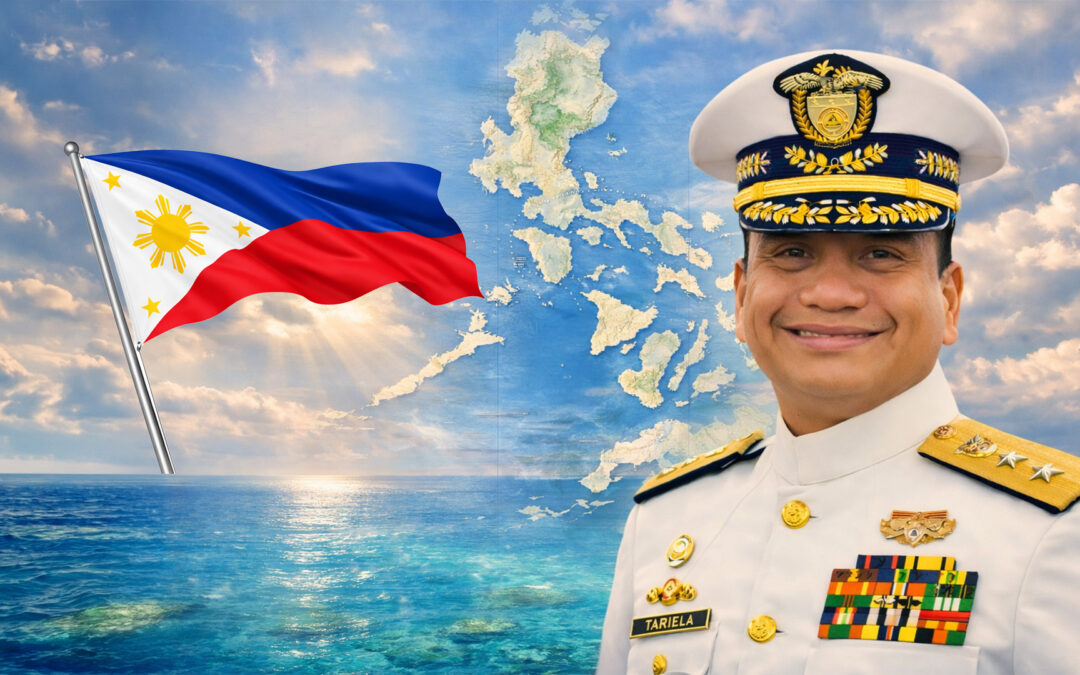
The recent public statements of Senator Robin Padilla, suggesting that the Philippine government’s transparency campaign in the West Philippine Sea (WPS) has evolved into “wartime propaganda” and attributing its escalation to Philippine Coast Guard spokesperson Rear Admiral Jay Tarriela, have sparked a national conversation that extends beyond personalities. At its core, the issue is whether the Philippines should openly communicate the realities occurring within its maritime domain or remain silent in the face of persistent coercive actions. This is not merely a communications issue—it is a matter of national policy, sovereign rights, and strategic governance.
For the public interest, this debate matters because the West Philippine Sea is not an abstract geopolitical issue. It affects the livelihood of Filipino fisherfolk, the security of maritime routes, the protection of marine resources, and the country’s ability to exercise rights recognized under international law. When incidents at sea are hidden from public view, citizens are left with incomplete information about matters that directly affect food security, economic stability, and national sovereignty.
The Philippine government’s transparency strategy was adopted as a deliberate, peaceful, and rules-based response to increasing tensions in the West Philippine Sea. Rather than responding with force, the government has chosen to document and publicly disclose incidents involving harassment, obstruction, water cannon attacks, dangerous maneuvers, laser incidents, and other actions affecting Philippine vessels and personnel operating within areas where the country exercises sovereign rights and jurisdiction under international law. This approach reinforces diplomacy with facts rather than confrontation with force.
Rear Admiral Jay Tarriela, as the Philippine Coast Guard’s official spokesperson on the West Philippine Sea, has served as the principal communicator of this policy. His role has not been to create conflict but to ensure that information released to the Filipino people and the international community is timely, factual, and supported by documentary evidence. Transparency, in this context, serves as a confidence-building measure that promotes accountability and allows the international community to objectively assess developments based on verifiable facts rather than competing narratives.
Characterizing this effort as “wartime propaganda” overlooks the fundamental distinction between propaganda and transparency. Propaganda seeks to manipulate information for political or military advantage, often through distortion or misinformation. Transparency, on the other hand, relies on documented evidence, factual reporting, and openness. The Philippine government’s strategy has consistently involved releasing videos, photographs, vessel tracking data, and official reports that can be independently examined. Such disclosures are intended to uphold international law, support diplomatic engagement, and strengthen public understanding of issues affecting national sovereignty.
This approach is also consistent with the Philippines’ obligations and rights under the United Nations Convention on the Law of the Sea (UNCLOS), which provides the legal framework for maritime entitlements, sovereign rights, and jurisdiction. It is further reinforced by the 2016 Arbitral Award in the South China Sea Arbitration, which clarified important aspects of the Philippines’ maritime rights. In this sense, transparency is not a political performance; it is a lawful and responsible way of asserting what international law already recognizes.
Equally important is the recognition that defending Philippine sovereign rights does not diminish the country’s identity as part of the Asian and Austronesian family. Shared history, culture, and regional ties should encourage mutual respect and peaceful coexistence among nations, not acquiescence to actions that undermine internationally recognized maritime rights. Good neighborly relations are best sustained when all parties adhere to international law, particularly UNCLOS, and resolve differences through peaceful means.
The transparency campaign has also strengthened the Philippines’ credibility internationally. By consistently presenting documented evidence of developments at sea, the country has demonstrated restraint, professionalism, and adherence to the rules-based international order. This approach has generated broader international awareness and reinforced support for freedom of navigation, respect for international law, and the peaceful settlement of disputes.
At the national level, transparency has empowered Filipinos to better understand the challenges confronting the country’s maritime domain. It has highlighted the courage and professionalism of the Philippine Coast Guard, the Armed Forces of the Philippines, and Filipino fisherfolk who continue to operate under difficult circumstances. Public awareness is essential in building national resilience and fostering a unified commitment to safeguarding the country’s maritime interests. When citizens are informed, they are better able to support policies that protect the nation’s seas, resources, and long-term security.
As the Philippine Archipelagic Sea Lanes Center, Inc. (PASLCI), we express our full support for the Philippine government’s West Philippine Sea Transparency Strategy as a peaceful, lawful, and responsible instrument of maritime governance. We recognize the important contribution of Rear Admiral Jay Tarriela and the Philippine Coast Guard in implementing this policy through factual communication, institutional professionalism, and unwavering commitment to public service.
The Philippines must never allow truth to become a casualty of geopolitical competition. Transparency is not an act of provocation; it is an affirmation of democratic governance, accountability, and respect for international law. Remaining silent in the face of actions that affect our sovereign rights would neither promote peace nor strengthen regional stability. Instead, responsible transparency serves as a vital pillar of diplomacy, deterrence, and informed public discourse.
The enduring lesson from this controversy is clear: defending the nation’s maritime rights begins with defending the truth. A nation that confidently presents the facts, remains faithful to international law, and speaks with one voice strengthens not only its position before the world but also the unity and resolve of its own people. The Philippine government’s transparency campaign in the West Philippine Sea is therefore not propaganda—it is an indispensable expression of responsible statecraft and a cornerstone of protecting the country’s maritime future.
References
- United Nations Convention on the Law of the Sea (UNCLOS), 10 December 1982.
- Permanent Court of Arbitration, South China Sea Arbitration (The Republic of the Philippines v. The People’s Republic of China), Award of 12 July 2016.
- Philippine Coast Guard official West Philippine Sea briefings and public incident reports.
- Department of Foreign Affairs statements and public advisories on the West Philippine Sea.